Aladin — Modernizing Sharia Banking
Designing a Sharia-compliant digital banking app for Gen Z and millennial Muslims in Indonesia: 225K+ verified users in year one and a 4.8★ rating at pilot.
01Impact first
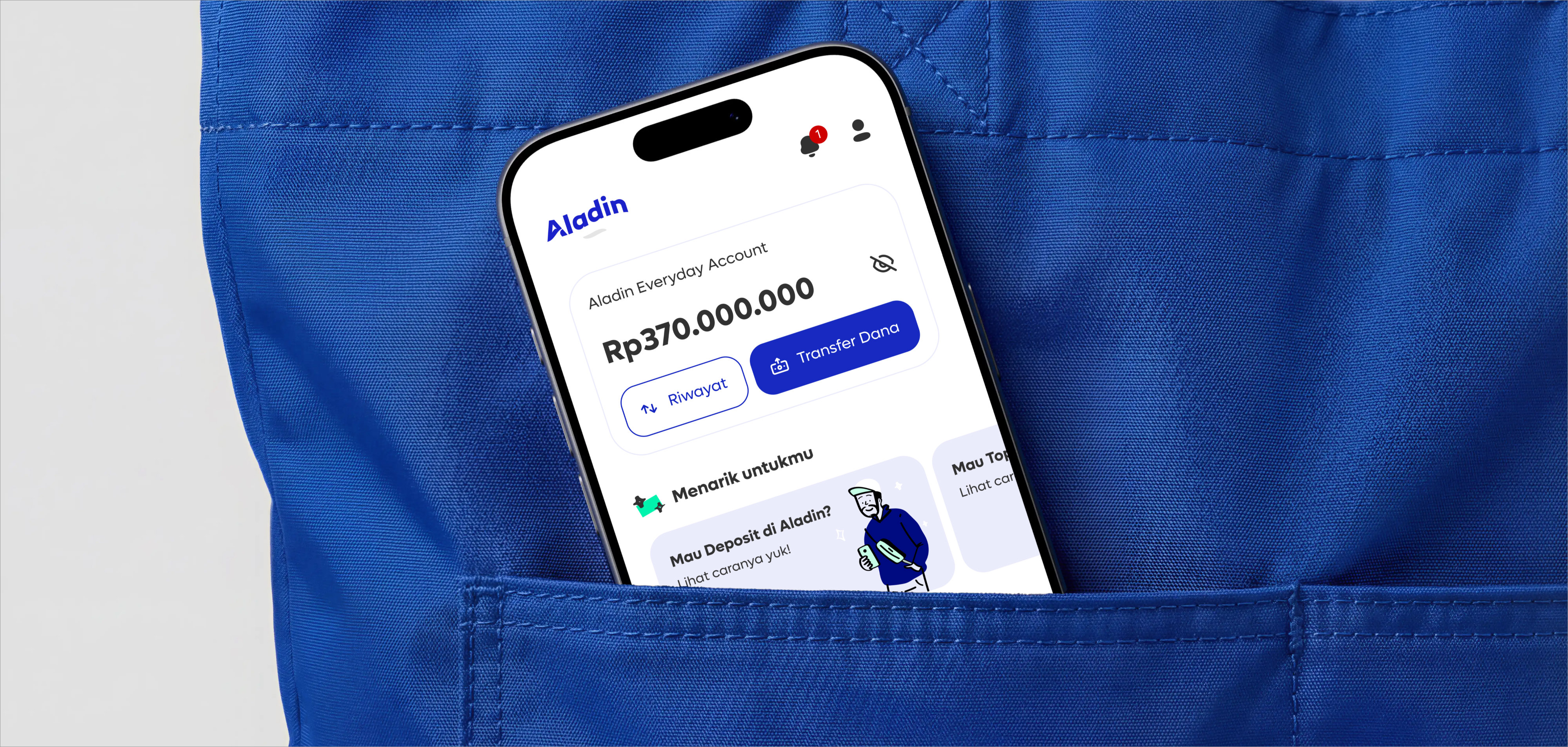
Indonesia has the world's largest Muslim population, yet when we started in 2020, Sharia banking held just 5.8% of the country's banking assets. Aladin set out to close that gap with a bank that lives entirely on a phone. The design worked: onboarding drop-off fell 45%, in-app feature usage rose 70%, the pilot earned a 4.8★ Play Store rating, and by December 2022, the bank had more than 225,000 verified users.
02The problem
We surveyed 157 Muslim users in Jakarta before drawing a single screen. The numbers told a blunt story. 60% didn't own a Sharia bank account, and 52% couldn't explain what the benefit would be. Young users saw Islamic banking as outdated and hard to use. Convenience came first; values were a bonus. Meanwhile, 65% already used digital banking, mostly Jenius, which they praised for its ease. No product on the market served both the faith and the convenience.
03Research and personas
Using the four Muslim mindsets framework (Rationalist, Universalist, Conformist, Apathist), we mapped who we could actually win. Conformists already bank with fully Halal-endorsed institutions. Apathists don't care either way. The opportunity sat with Universalists, who balance function with faith, and Rationalists, who ask "what do I get?" before anything else. That single decision shaped everything after it: the app had to compete with Jenius on convenience first and earn trust on Sharia compliance second.
04What I led
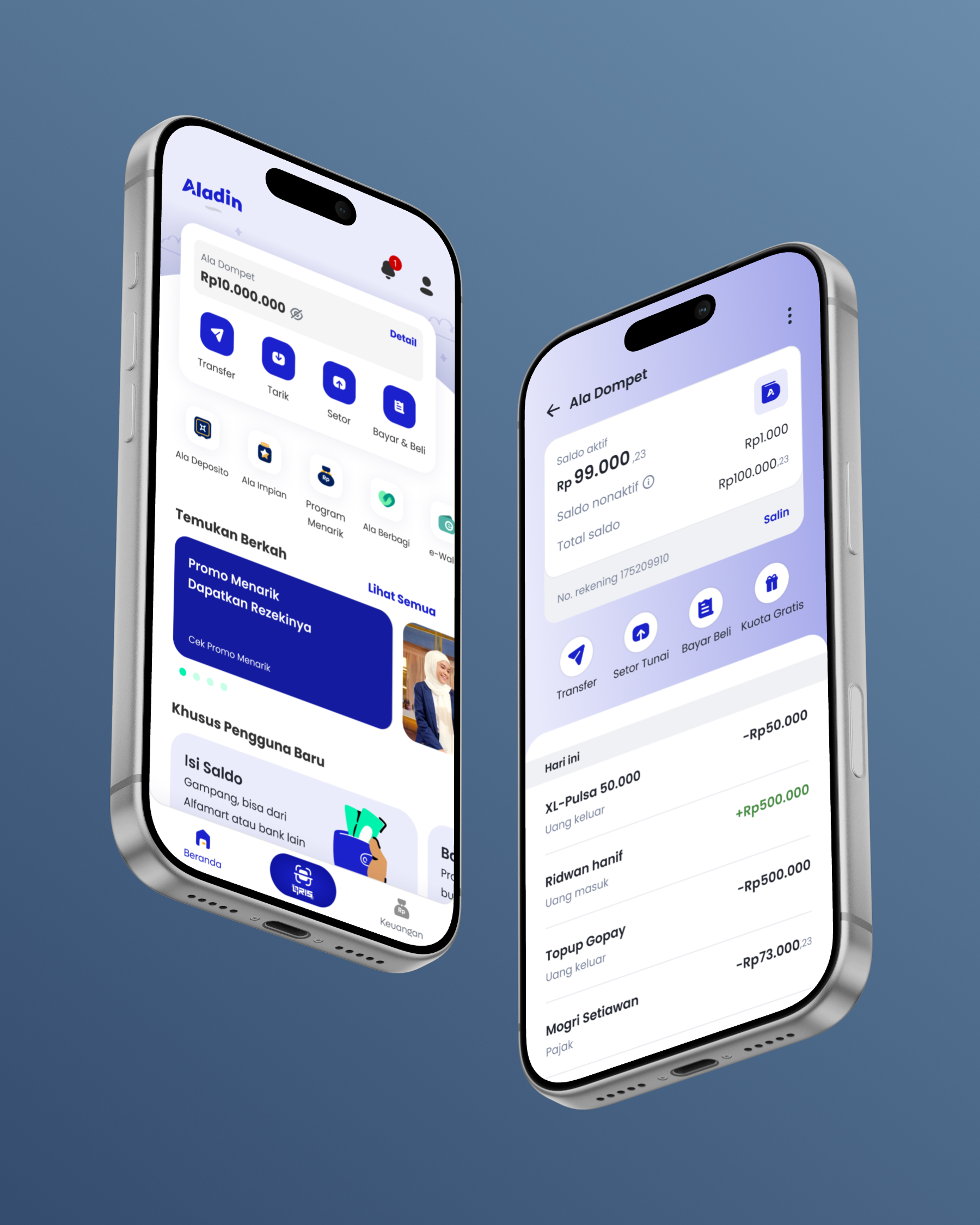
As AVP of product design, I owned research through delivery: stakeholder interviews, the survey and persona work, end-to-end flows for onboarding, transfers, QRIS payments, savings, and Zakat, plus a design system that both product and marketing teams adopted. The hardest part wasn't the screens. It was sitting between Sharia advisors, Legal, and Compliance until every journey satisfied Islamic finance principles without burying the user in religious jargon.
05Key design decisions
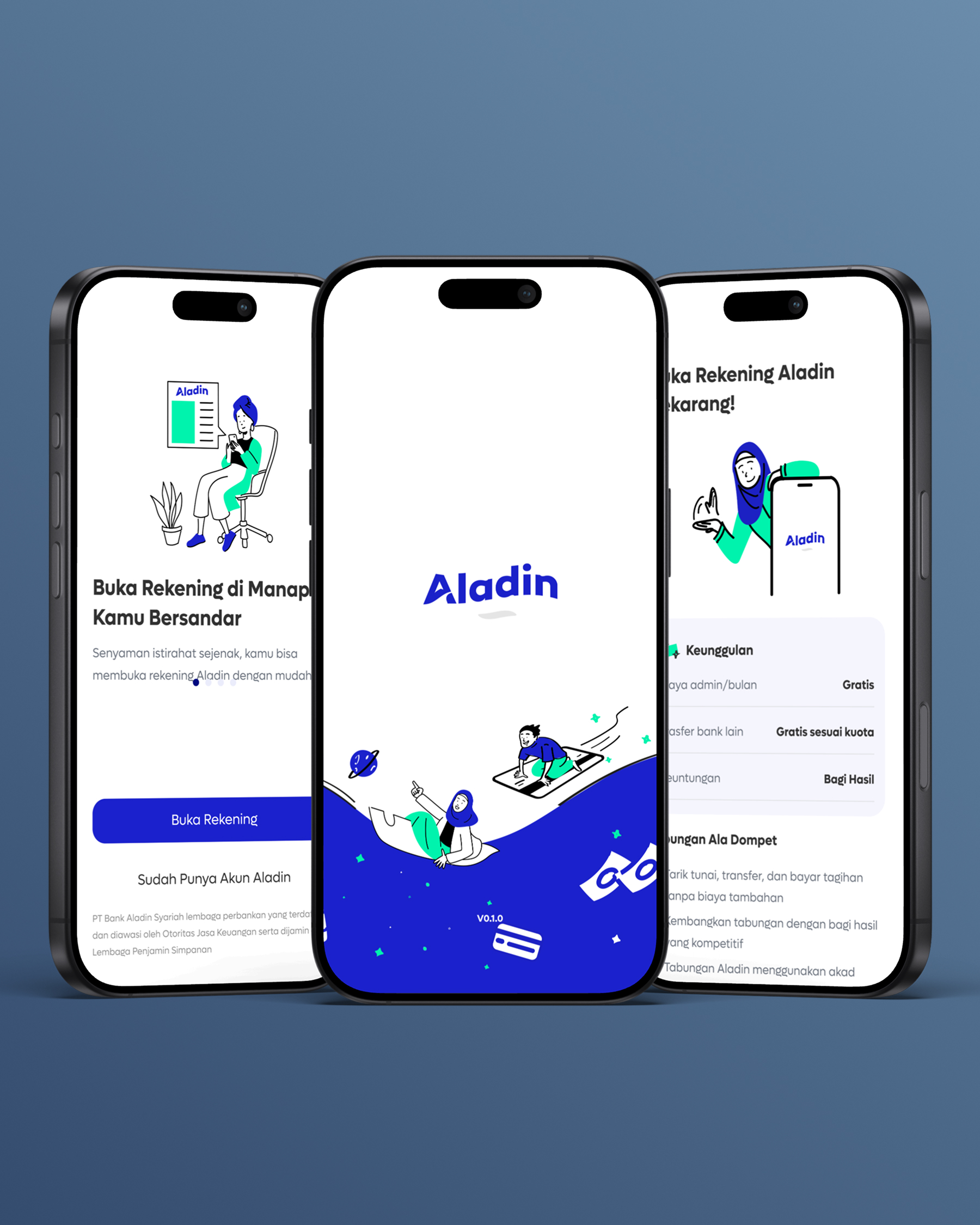
· Onboarding with no video call: in-app liveness verification made account opening fast and private. This became our sharpest edge; competitors still required scheduled video interviews
· Sharia explained in plain language: short, contextual notes instead of dense religious text. Inclusive for the curious, respectful for the observant
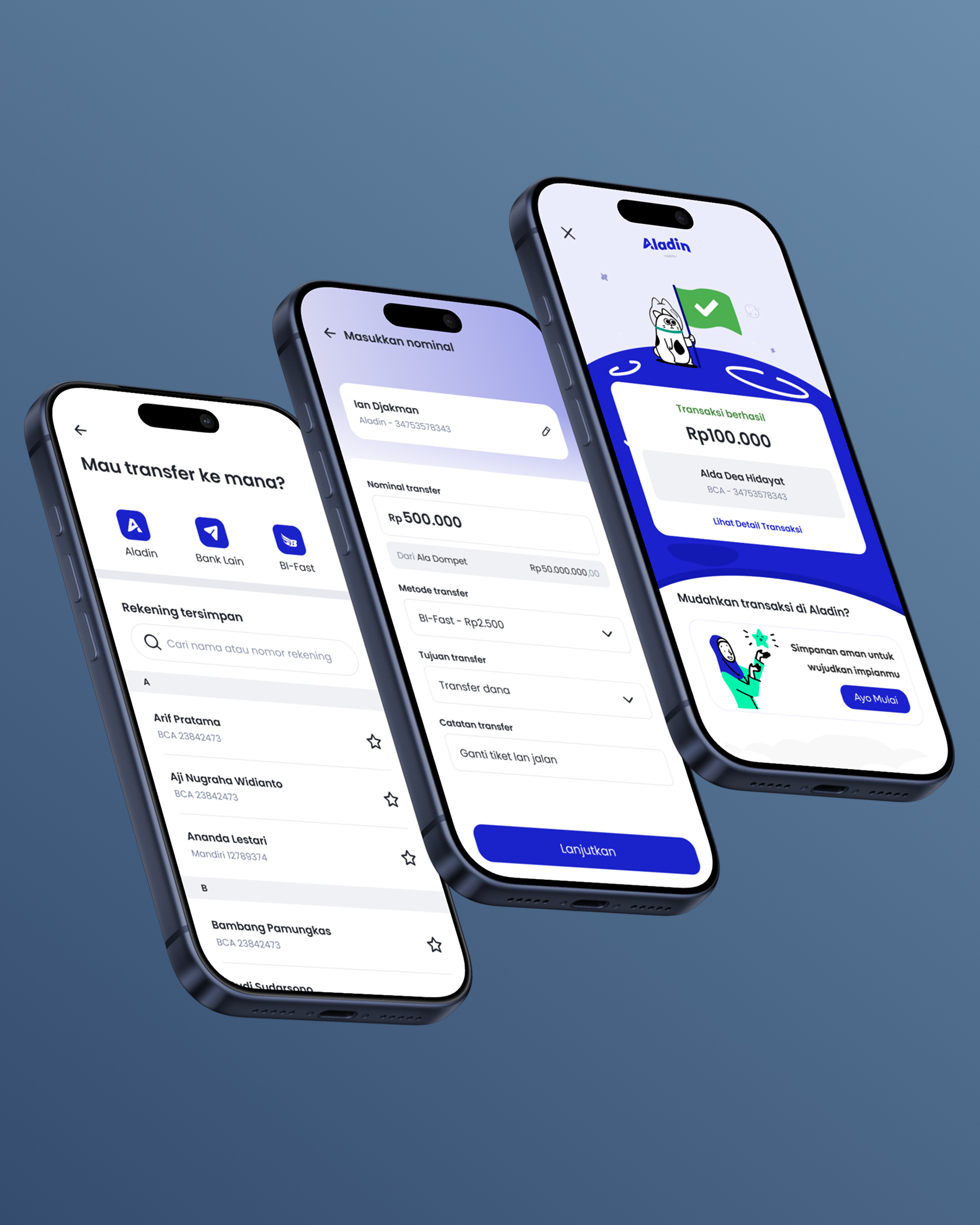
· Deliberately step-by-step transfers in year one, so first-time digital banking users always knew where they were. Once usage data showed confidence, we shortened the flow in year two
· Zakat, Infaq, and Sadaqah are designed into the core experience, with impact feedback like "your Zakat helped 3 families this month"
06What the market taught us
Not everything worked. In year one, the app only offered transfers, savings, and a debit card, and average transactions sat around four per user per month. Limited use cases meant limited habit. The copywriting also started too casual and wordy, so screens felt cluttered, and later iterations moved to shorter, action-driven messaging. What did work: the onboarding was regarded as the smoothest in the market, and it converted. Those 225,000 verified users came through a flow with no branch visit and no video call.
07Reflection
Ethical principles and product convenience aren't opposites. Culturally-sensitive design turned out to be a business advantage, but only because we treated Sharia advisors as design partners instead of gatekeepers. If I could do it again, I'd push harder for more transaction features in the MVP. Trust gets users in the door; utility keeps them.
Let's build something that moves the numbers.
Need a product design lead for your team, or senior hands for a freelance project? Let me know what you're building and where it's stuck.